The traditional OODA loop (Observe, Orient, Decide, Act), developed in the 1960’s by the US, was adopted and remains doctrine in the Canadian military since the mid 1990’s.
However, with the modern advent of Artificial Intelligence (AI), the OODA Loop is evolving in scope. This evolution is being fostered not only by AI-augmentation but also by evolving approaches to warfare in the form of networked concepts of engagement, primarily Kill Webs, Hyperwar, “Super OODA Loops”., and “Human-Machine Teaming”.
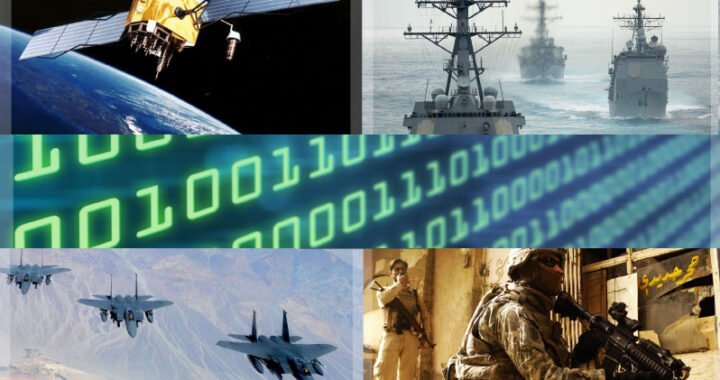
While the traditional OODA loop focused on a human pilot’s cognitive speed, modern warfare requires decisions faster and better than human-only cognition can manage, across all domains (land, air, maritime, space and cyber). Recent strategies emphasize that these domains are increasingly blended, moving toward Joint All-Domain Command and Control (JADC2) to synchronize operations, including in the electromagnetic spectrum.
Here is the current state of what the traditional OODA loop in modern warfare is becoming:
1. The Shift to “Kill Webs” and Hyperwar
The Kill Chain (F2T2EA) traditional model outlines the process of engagement:
- Find: Detect a potential target.
- Fix: Determine the precise location.
- Track: Monitor movement.
- Target: Select appropriate assets.
- Engage: Execute the attack.
- Assess: Evaluate the results.
Both the Kill Chain and the OODA Loop are morphing into Kill Webs – a decentralized, resilient mesh of everything that operates between sensors (e.g.: radar, electro-optical/infrared imaging, acoustic, chemical, etc.) and effectors (e.g.: kinetic, non-kinetic energy, cyber-jamming, unmanned, etc.) that enhance the ability to achieve Decision Advantage as well as faster and more accurate responses:
- Hyperwar: Refers to conflict and decision-making, at machine speed, augmented by new and continually evolving Artificial Intelligence (AI) systems to compress the decision-action cycle into near-instantaneous responses.
- Decentralization: Instead of one loop, kill webs create many parallel loops, allowing forces to draw upon and attack from multiple domains (air, land, sea, space, and cyber) and across a joint multi-national coalition forces (when required), simultaneously.
2. “Super OODA Loops” and AI-Assisted Decision Making
AI is transforming the OODA loop by automating the phases, particularly in high-intensity and/or politically sensitive environments.
- Automated Observation/Orientation: AI algorithms analyze vast datasets ranging from sensors to effectors, identifying threats, and far exceeding the human capability to “orient”.
-
- Compression: AI compresses the Decide and Act phases, often bypassing human decision-makers for “machine-on-machine” engagements (e.g.: inbound missile defense identification and counter-measure deployment) within the Rules of Engagement.
- Predictive Modeling: Future systems are moving toward PAIM (Predict, Act, Indicate, Model), relying on AI to help predict potential enemy moves, providing Commanders with awareness and options for both proactive and reactive actions.
3. Matrix Operations (Simultaneous Optimization)
Beyond just enhanced speed and superior Situational Awareness, modern warfare is also shifting toward Matrix Operations – the integration, optimization and synchronization across a multinational allied environment, of simultaneous actions across multiple domains (air, sea, maritime, space and cyber) and functions (logistics, intelligence) in real-time.
- Simultaneous Action: Unlike the traditional linear OODA loop, Matrix Operations enable AI-enhanced systems to coordinate logistics, intelligence, and kinetic action all at once.
- AI-enhanced data and information collection, integration, filtration, and analysis means forces can contribute to, and take advantage of faster, standardized, context sensitive, and shared Situational Awareness, both alone or across Joint Interagency Multinational and Public (JIMP) organizations and environments, to operate as a cohesive Combined Joint Task Force (CJTF), increasing every Commander’s Decision Advantage across the spectrum of strategic, operational and tactical levels.
4. Human-Machine Teaming (HMT)
The weight of effort and investment has traditionally been:
- Networks and Data (People, Platforms and Infrastructure), and
- Workflow Automation (movement and presentation of data)
This effort must continue as usual, however, there is a new and growing demand to apply weight of effort into something new: Human-Machine Teaming (decision collaboration). Without investment into HMT the military can really only plan for yester-war. To effectively plan for tomorrow’s warfare, Decision Advantage must become the third leg of the stool. In Oder to achieve Decision Advantage, the military must deliver Command and Control (C2) that are integrated-by-design to enable flexible, survivable distribution and federation for optimal C2 performance.
The new OODA loop must be augmented with with the speed of modern AI automation, as well as international standards for integration, sharing and cooperation. In HMT the human is not removed from the loop, but is shifted to a Command and Control supervisory role to ensure ethical, political, and rules-of-engagement are enforced, particularly in complex, high-stakes situations.
The bottom line is, that certain data, information and actions can and should be handled by machines. However, machines have no intuition, reasoning capability, and don’t understand the implications of morals and ethics. Nor do machines know how to take advantage of “hunches”, or factor in “luck”. So, no matter how fast or accurate machines get, at for the near future, humans must be in-the-loop to handle all the factors that lay outside of machine capabilities.
This generates a pressing need to mature frameworks, systems and processes for Human/Machine Teamwork (HMT). Such frameworks now exist, but they are still in early stages. However, these frameworks and associated processes will continue to mature, just as the OODA loop has matured over the past half century.
For instance, AI-assisted systems are far faster than people in filtering through the vast repositories of data and information to determine things such as:
- What is plausible, then
- What is available, then
- What is accessible, then
- What is usable
These questions need to be evaluated in every situation, over every domain, and over every member of a coalition to take advantage of the fastest and most effective response. This includes everything from sensors to effectors, and even logistics, down to the smallest details, such as borrowing parts from another country’s inventory to expedite repair a critical piece of equipment until that part can be replenished.
So you can see this transformation is not just talking about the big picture of target identification and response. The addition of HMT is becoming integral from the biggest to smallest aspects of tomorrow’s warfare. HMT is a significant differentiator between planning for yester-war and planning for future war.
Summary: OODA vs. Modern Warfare
|
Feature |
Traditional OODA Loop |
Modern Warfare (Post-OODA) |
|
Speed |
Human Cognitive Speed |
Machine/AI Speed (Hyperwar) |
|
Structure |
Linear/Sequential Loop |
Decentralized Kill Web/Mesh |
|
Orientation |
Human Intuition/Experience |
AI Pattern Recognition/Big Data |
|
Action |
Human-Executed |
Autonomous/Semi-autonomous |
|
Focus |
Speed/Maneuver |
Simultaneous/All-Domain |
In short, the OODA loop is evolving because it’s no longer the fastest or best way to operate. The addition of advanced AI-enabled systems along with Human-Machine Teaming is becoming the way forward to achieving sustainable Decision Advantage.
Dr. Randy Frid